




- Details
- Written by Super User
- Sample Data-Articles
- Hits: 857
Dental implants, why not you?
What is a dental implant?
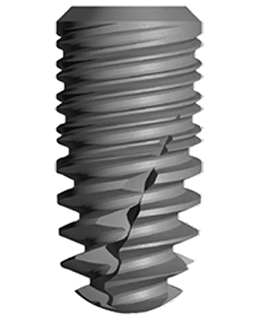 An artificial root to replace one or more missing teeth
- A surgery performed in the dental clinic under local anesthesia
- A proven solution with success rates above 95%
- The after effects, in general, are not painful
- Chewing sensations comparable to those of natural teeth
Different methods of treatment
Replacement of one or more missing teeth
Improved smile and confidence
How much does it cost?

First, the cost of a treatment varies depending on the size of the edentation. The importance of the latter will define the number of implants needed to determine the future prosthesis and, therefore, the budget needed to carry out the project. However, it should be noted that the number of implants will not necessarily be equal to the number of roots lost. After each individual case the amount required for replacement with dental implants is determined.
The sustainability of edentation can also influence the cost and treatment. In general, the loss of a tooth is accompanied by a bone that can prevent dental implantation. Depending on the case, it may be necessary to plan a bone implant, which will continue to be included in the treatment price.
Finally, aesthetic expectations require, in some cases, certain specific operations techniques to meet these demands. These contributions to the surgical or prosthetic plan can also be taken into account for price estimation.
These are the reasons why it is generally difficult to find accurate answers to the cost of implants. The price range is variable depending on the situations and expectations of each one. Regarding the budget, we recommend that you consult a dentist-surgeon who will give you a detailed estimate that will be accurately tailored to your case and expectations.
8 reasons for choosing a dental implant:
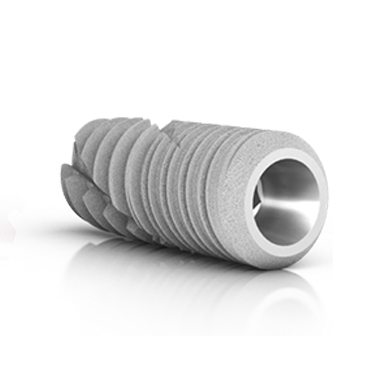 A perfectly integrated artificial root
- Little post-operative pain
- Sensations comparable to natural teeth
- An alternative that protects the residual bone
- A treatment without damaging healthy teeth
- Choosing a sustainable solution *
- An aesthetic result
- The pleasure of eating, of smiling ... of simply living
Ask your dentist, he will be able to advise you and suggest the best solution for your situation,
(*) To guarantee the sustainability of the implants, it is necessary to consult with the dentist once or twice a year regarding the natural teeth.
- Details
- Written by Super User
- Sample Data-Articles
- Hits: 723
Prosthesis EVL
Simple & comprehensive

EVL® implants have a complete range of prosthetic components for fixed cement-retained and screw-retained restorations or for stabilising dentures.
The deep hexagonal internal connection helps to guide the prosthetic components during insertion and promotes their long-term stability. Operations are simplified and the time spent in the dentist’s chair optimised, in particular when there are thick tissues or in the posterior area where visibility and access are often difficult. The EVL® range of prostheses is particularly appreciated by practitioners looking for ease of use.
Preparation of the prosthetic seating
The healing screw is an essential component in the restoration phase of the EVL® implant system as it marks the prosthetic emergence profile of the future tooth.

The profile of the EVL® healing screws is based directly on the aesthetic ring*. The taper prepares the entrance of the prosthetic seating and shapes a close-fitting, tension-free tissue access to match the profile of the final components. With the EVL® system, the management of the prosthetic emergence profile is particularly effective in cases of gingival tonicity.
(* unique, original and proven system for preparing the mucosa for the EVL® implant)
Adjustable titanium abutments

The FMTA range for cement-retained prostheses is available in two periodontal heights (0.4 mm and 2.0 mm) and in straight or angled (8°, 15° and 23°) versions. The adjustable chamfers of this range enable the prosthetist to optimise the customisation of the abutments and to adjust the rim of the future crown aesthetically.
The FMTA range includes trial abutments to provide an accurate preview of the component on a model or in the mouth before the final choice is made. A colour code for each diameter and marking make the formats quick to identify.
MULTI (straight) and MUA (angled) pillar abutments

MULTI and MUA pillar abutments are indicated for screw-retained bridges and prostheses on bars. Their wide shoulders make it easy to obtain passive frameworks..
MUA pillar abutments are available with 18° and 30° angles. They are easy to insert using the reusable MUA pillar abutment driver.
MULTI straight pillar abutments have an angular tolerance of 2×25° and are supplied with a disposable driver.
Note: The second parts of MULTI pillar abutments are compatible with the EVL®C one-piece implant.
Stabilisation of complete prostheses

The EVL® system includes BALL pillar abutments (compatible with Dalbo®) and LOCATOR® pillar abutments for stabilising removable prostheses. BALL and LOCATOR® pillar abutments are available for all three implant diameters.
These two proven attachment systems enable you to offer the most suitable solution for each clinical situation.
Comprehensive prosthesis kit

The compact, functional, EVL® prosthesis kit covers all requirements. It enables any type of restoration on the EVL® range of implants.
It includes a torque wrench (0-35 N.cm tightening torque), a 3-in-1 LOCATOR® wrench, a LOCATOR®-compatible wrench and an activator for Dalbo attachments. The hex. wrenches are available in two heights.


- Details
- Written by Super User
- Sample Data-Articles
- Hits: 698
EVL Instrumentation
EVL® surgical kit

The EVL® kit is compact and ergonomic. It contains the instrumentation for the initial and intermediate drilling sequences for inserting EVL® K, EVL® S and EVL® C implants.
The final drilling for EVL® K, EVL® S and EVL® C implants is carried out using the disposable final drill supplied with the implant. The instruments are arranged on an easy-clean removable tray.
The kit also includes the drilling depth stops. These come in a removable container enabling direct contra-angle pick-up.

Disposable homothetic final drill

EVL® implants are supplied with their disposable final drill sized for the diameter and length of the implant shaft.
A refined geometry

The cutting angle of the edges is designed to give the practitioner constant, suction-free control of the progress of the drill. he open point angle of the final drills reduces apical over-drilling and thus reduces the invasiveness of the osteotomy.
The 3 lips give the drill excellent stabilityat the start of drilling. The standard incrementation of the diameters from 0.5 mm to 0.7 mm provides adjustable progressive preparation according to the bone type.
With this design, the drilling axis can easily be corrected if necessary. The helical grooves and the escape angle of the drills promote optimum removal of bone shavings, whatever the bone density.
Global D drills are machined by leading companies specialising in the manufacture of cutting tools for medical applications.
KONIK kit option

Re-usable final drills for the EVL® K implant are also available as an option in the KONIK kit.
This option enables practitioners to carry out complete drilling sequences using tapered drills. The incrementation of the osteotomy is thus homogeneous as the reaming progresses:
Over or under-sizing of the implant shaft according to the bone density is totally homothetic to the EVL® K implant.The primary stability is uniformly distributed over the endosseous surface of the implant.